
Custard is one of those quiet kitchen ideas that turns up everywhere in Europe, wearing different clothes. In Britain it is poured from a jug over crumble; in France it is torched under a brittle sugar lid; in Spain it is chilled, caramel-coated, and turned out with a wobble. The ingredients are stubbornly similar — eggs, milk or cream, sugar, and a little patience — but the traditions around them are distinct. Understanding those differences makes each dessert easier to cook and more rewarding to eat.
The Common Thread: Eggs, Dairy, and Gentle Heat
All custards rely on egg proteins, and sometimes starch, to thicken. Heat them too fast and they curdle or turn grainy; heat them too little and they stay liquid. French and Spanish baked custards usually depend on eggs alone, while British pouring custard often uses cornflour or custard powder for a smooth, reliable body. Natillas sit somewhere in between: stirred on the stove, lightly thickened, and served with a spoon.
The cooking method matters as much as the recipe. Stirred custards are cooked on the hob until they coat the back of a spoon. Baked custards are set in a water bath in a low oven. Both reward the same instinct: stop before you think you should. A custard that looks slightly underdone in the centre will finish setting as it cools.
British Custard: The Jug and the Tart
Pouring Custard
British pouring custard is comfort food in its plainest form. Warm milk with vanilla, nutmeg, or a split vanilla pod, whisk it gradually into egg yolks and sugar, then return the mixture to the pan. Cook gently, stirring constantly, until it thickens enough to coat a spoon. Do not let it boil. If you use custard powder, follow the packet instructions but use good milk and a splash of cream for a fuller flavour. Serve it warm with sticky toffee pudding, apple crumble, steamed sponge, or a simple fruit pie.
The Custard Tart
A British custard tart is a shortcrust pastry case filled with a set egg custard and grated with nutmeg. It is not the same as a Portuguese pastel de nata, though both have a custard centre; the British tart is usually shallower and nutmeg-led. Bake it low and slow until the edge is set and the centre still has a slight wobble. Let it cool to room temperature before slicing.
- For pouring custard, cook to about 80°C (176°F), or until it coats the back of a spoon.
- For custard tart, blind-bake the pastry first, then bake the filling at about 150°C (300°F).
- Grate nutmeg fresh over the top just before baking. It is the signature, not a garnish.
French Crème Brûlée: The Crackle
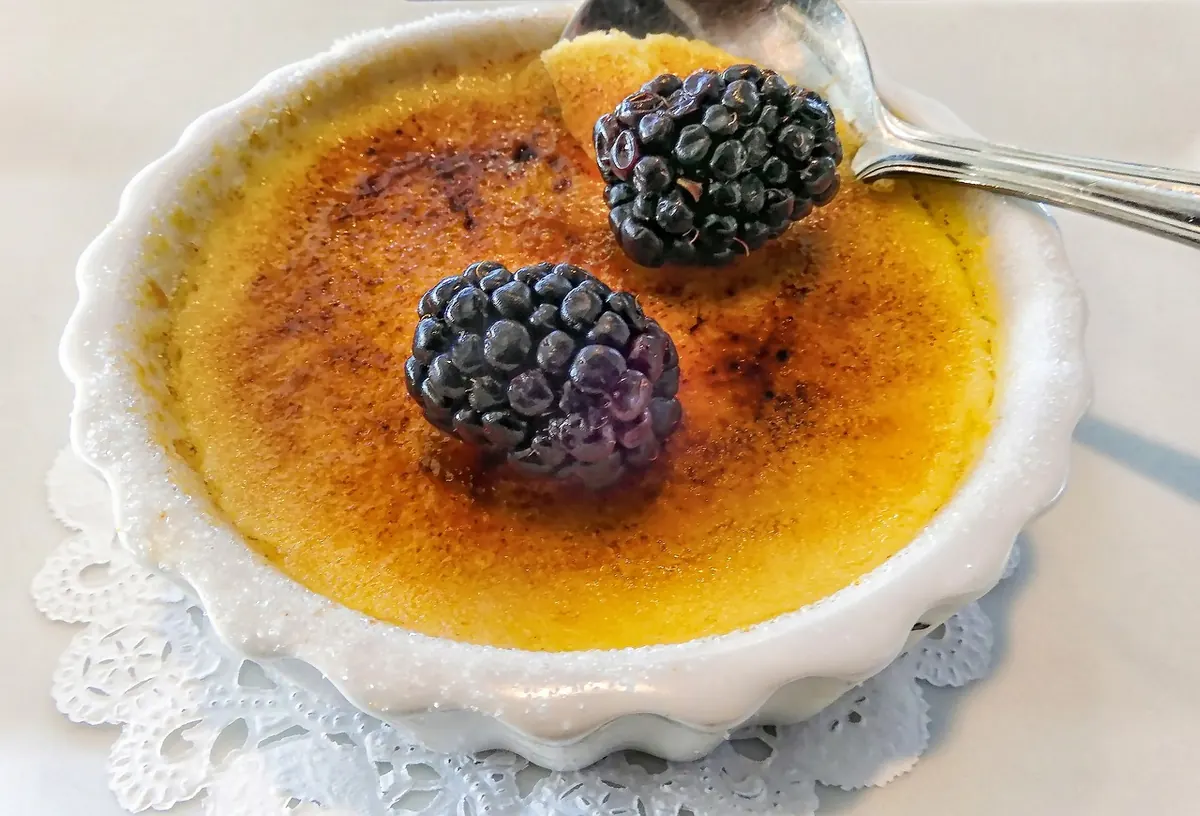
Crème brûlée is a baked custard of cream, egg yolks, sugar, and vanilla. It is richer and denser than British pouring custard. Heat the cream with vanilla, whisk it into the yolks and sugar, strain the mixture, and pour it into shallow ramekins. Bake in a water bath at about 150°C (300°F) until just set, then chill thoroughly. Before serving, sprinkle a thin, even layer of sugar over the top and torch or grill it until amber. Wait a minute, then crack through with a spoon.
Most failures come from three things: overbaking, which makes the custard spongy; using too much sugar, which turns the top sticky rather than crisp; and holding the torch too close, which scorches the surface. Keep the flame moving and stop when the sugar is the colour of light caramel.
Spanish Flan: The Upturned Custard
Spanish flan de huevo is a baked custard lined with caramel. Whole eggs and milk are mixed with sugar and vanilla or lemon zest, poured over a layer of caramel in a mould, baked in a water bath, chilled, and inverted. The texture is firmer and more sliceable than crème brûlée, and the caramel loosens into a sauce as the flan sits.
- Make the caramel directly in the mould and swirl it to coat the base and sides. Let it harden before adding the custard.
- Strain the custard mixture for a silkier finish.
- Bake in a water bath at about 150–160°C (300–320°F) until the centre is just set.
- Chill overnight. This makes unmoulding clean and improves the texture.
- Run a thin knife around the edge, place a rimmed plate on top, and invert quickly.
Spanish Natillas: Cinnamon and Spoon
Natillas are Spain’s stirred custard, often served in individual bowls and dusted with cinnamon. Milk is infused with lemon zest and a cinnamon stick, then cooked with egg yolks, sugar, and sometimes a little cornflour until thickened. It is not baked and not turned out. The texture is spoonable, lighter than flan, and often served with a Maria biscuit on top or alongside.
Regional versions vary. Some are flavoured with vanilla, others with a stronger cinnamon note. Because natillas cook on the stove, they need constant stirring over medium-low heat. Use a heavy pan. If the mixture starts to feel grainy, pull it off the heat immediately and whisk in a cold splash of milk. Strain it if you want a perfectly smooth finish.
Side by Side: Texture, Technique, and Serving
- British pouring custard: stirred, pourable, vanilla or nutmeg, served warm. Often thickened with cornflour or custard powder.
- British custard tart: baked, pastry-based, nutmeg-topped, tender but set, served at room temperature.
- French crème brûlée: baked, cream-rich, chilled, with a torched sugar crust. Served in its ramekin.
- Spanish flan: baked, caramel-lined, chilled, unmoulded. Firmer, sliceable, and sauced with caramel.
- Spanish natillas: stirred, cinnamon-scented, chilled, spoonable. Often served with biscuits.
These differences are mostly about how much starch enters the mixture, how the custard is heated, and how it is served. That means you can borrow techniques. The water bath that protects crème brûlée also protects flan. The tempering used for British pouring custard keeps natillas smooth. Once you know the pattern, the variations become easy to read.
Which One to Make First?
If you want instant comfort, start with British pouring custard. It comes together in one pan and is forgiving enough for a weeknight. If you want a bake for a tea table, make a custard tart. For a dinner-party finish, crème brûlée offers drama with a torch. For a make-ahead dessert that slices neatly, flan is the reliable choice. For something lighter, natillas is the quiet winner.
A few habits apply to all of them: use fresh eggs, strain the mixture, cook gently, and chill custards thoroughly before serving. Custards are perishable, so cool them quickly and keep them in the fridge. If you have dietary concerns about eggs or dairy, speak to a qualified health professional before making substitutions. Start with one tradition, taste it, and adjust. The differences between a British jug, a French ramekin, and a Spanish bowl are smaller than they seem — and each one is worth knowing by heart.